
Space debris, commonly known as “space junk”, refers to any man-made object in orbit around Earth that no longer serves a useful function. These objects are the leftovers from over 60 years of space exploration. While space is vast, the most useful orbits—such as Low Earth Orbit (LEO)—are becoming increasingly crowded.
Space debris generally falls into these categories:
- Defunct Satellites: Old spacecraft that have run out of fuel, suffered mechanical failures, or completed their missions.
- Rocket Stages: Massive parts of launch vehicles that remain in orbit after delivering their payloads.
- Fragmentation Debris: Small pieces created by the explosion of residual fuel in old rockets or collisions between objects.
- Mission-Related Trash: Items accidentally lost by astronauts, such as tools, gloves, or even flecks of paint.
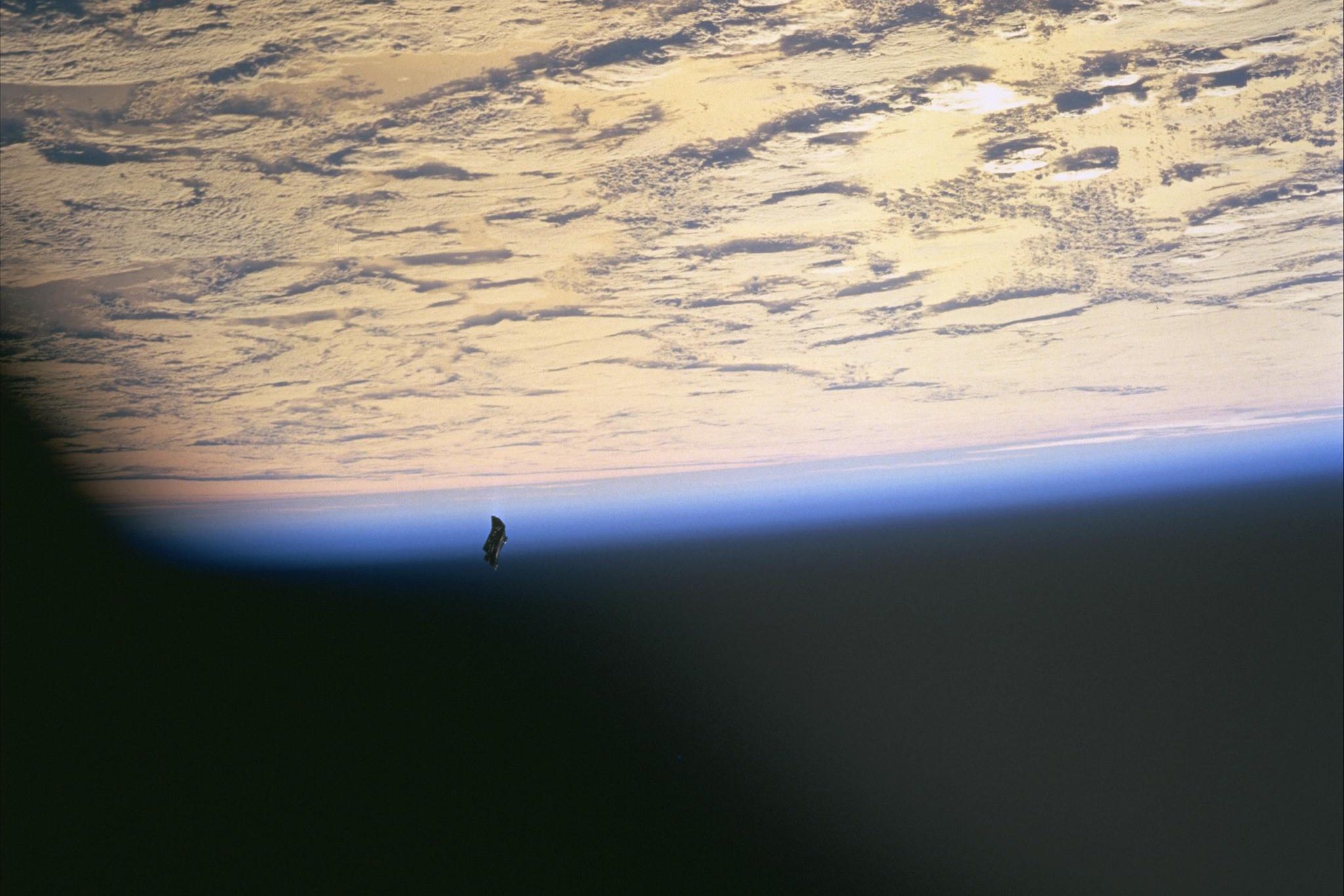
NASA – NASA Photo ID: STS088-724-66
Why is it Dangerous? The Physics of Impact
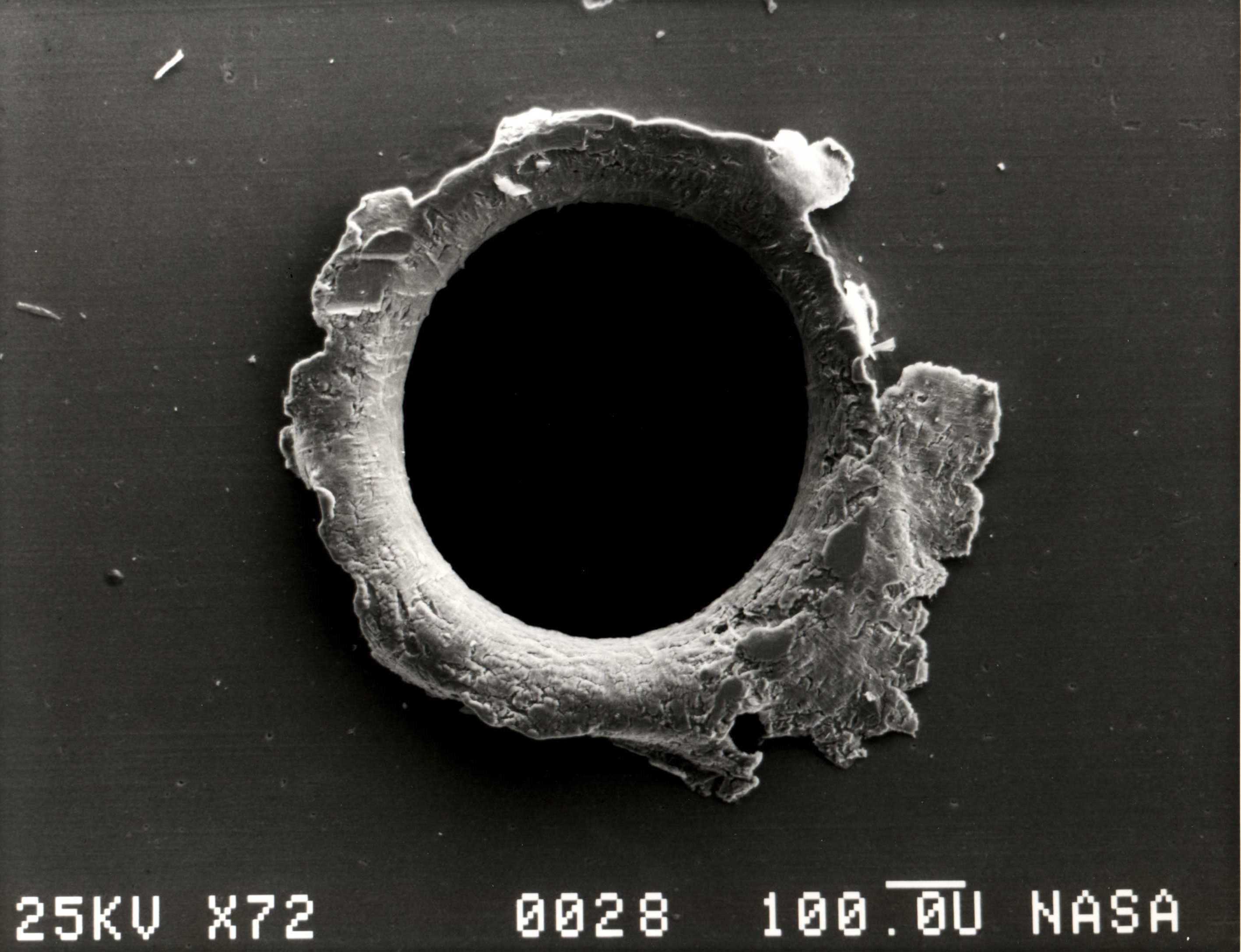
The primary danger of space junk isn’t necessarily its size, but its velocity. In Low Earth Orbit, objects travel at speeds of approximately 28,000 km/h (about 17,500 mph). At these speeds, even a tiny fragment the size of a marble can strike with the force of a full-speed car.
The destructive power of an impact is governed by the formula for kinetic energy:
Because objects in LEO have high velocity in order to keep their orbit and velocity is squared in the equation, the energy released during a collision is immense. A collision with a large piece of debris can completely track and destroy a multi-billion dollar functioning satellite, but even smaller size debris can be harmful for the instruments onboard.
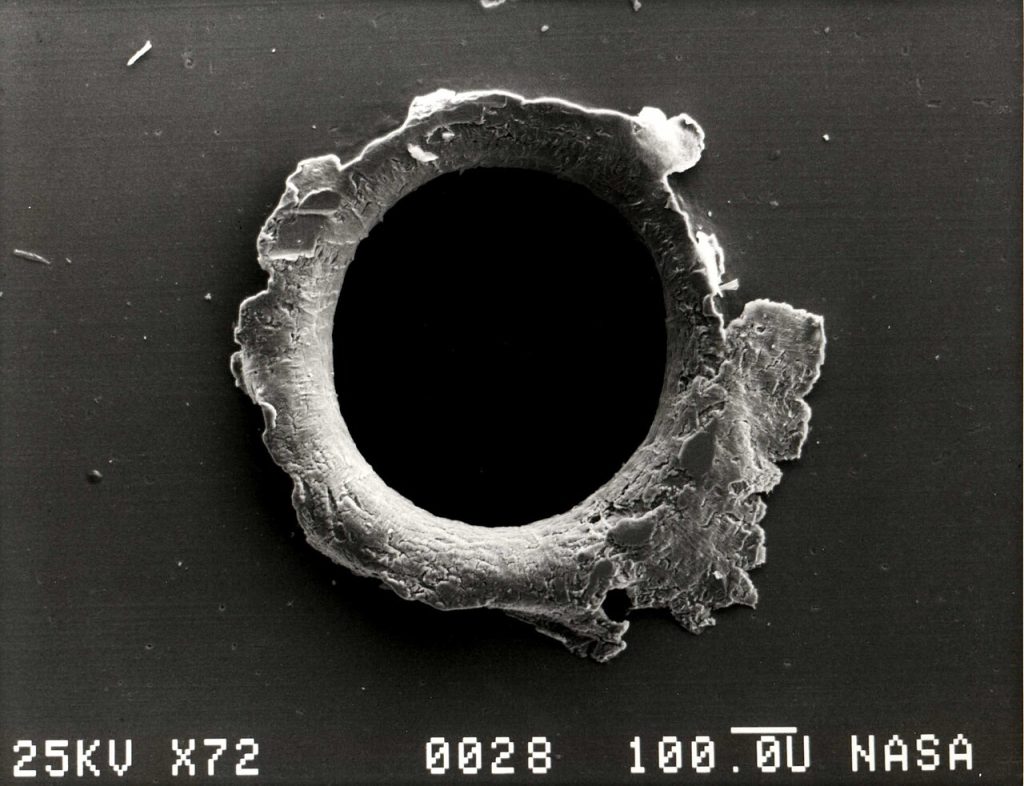
NASA image – https://www.orbitaldebris.jsc.nasa.gov/images/gallerypage/solarmaxhole.jpg
The Kessler Syndrome
Scientists are particularly concerned about a scenario known as the Kessler Syndrome. Proposed by NASA scientist Donald Kessler, this theory suggests that the density of objects in orbit could become so high that a single collision would trigger a “cascade effect”.
- One collision creates thousands of new, smaller fragments.
- These fragments then strike other satellites.
- A self-sustaining chain reaction occurs, eventually creating a cloud of debris that renders certain orbits unusable for centuries.
If this were to happen, we could lose essential services we take for granted, such as GPS navigation, accurate weather forecasting, and global telecommunications.
Modern Solutions and the Future
In 2026, managing orbital traffic has become a global priority for agencies like NASA and the ESA. Current strategies include:
- Mitigation: New satellites are now designed to “de-orbit” themselves at the end of their lives, burning up in the Earth’s atmosphere, or moving to a distant “graveyard orbit”.
- Active Debris Removal (ADR): Experimental missions are testing technologies like giant nets, robotic arms, and even harpoons to capture large debris and pull it down into the atmosphere.
- Laser Tracking: Using ground-based lasers to monitor the position of debris with millimeter precision, allowing active satellites to perform “collision avoidance maneuvers”.
Our mission: Intelligent Surveillance for a Sustainable Orbit
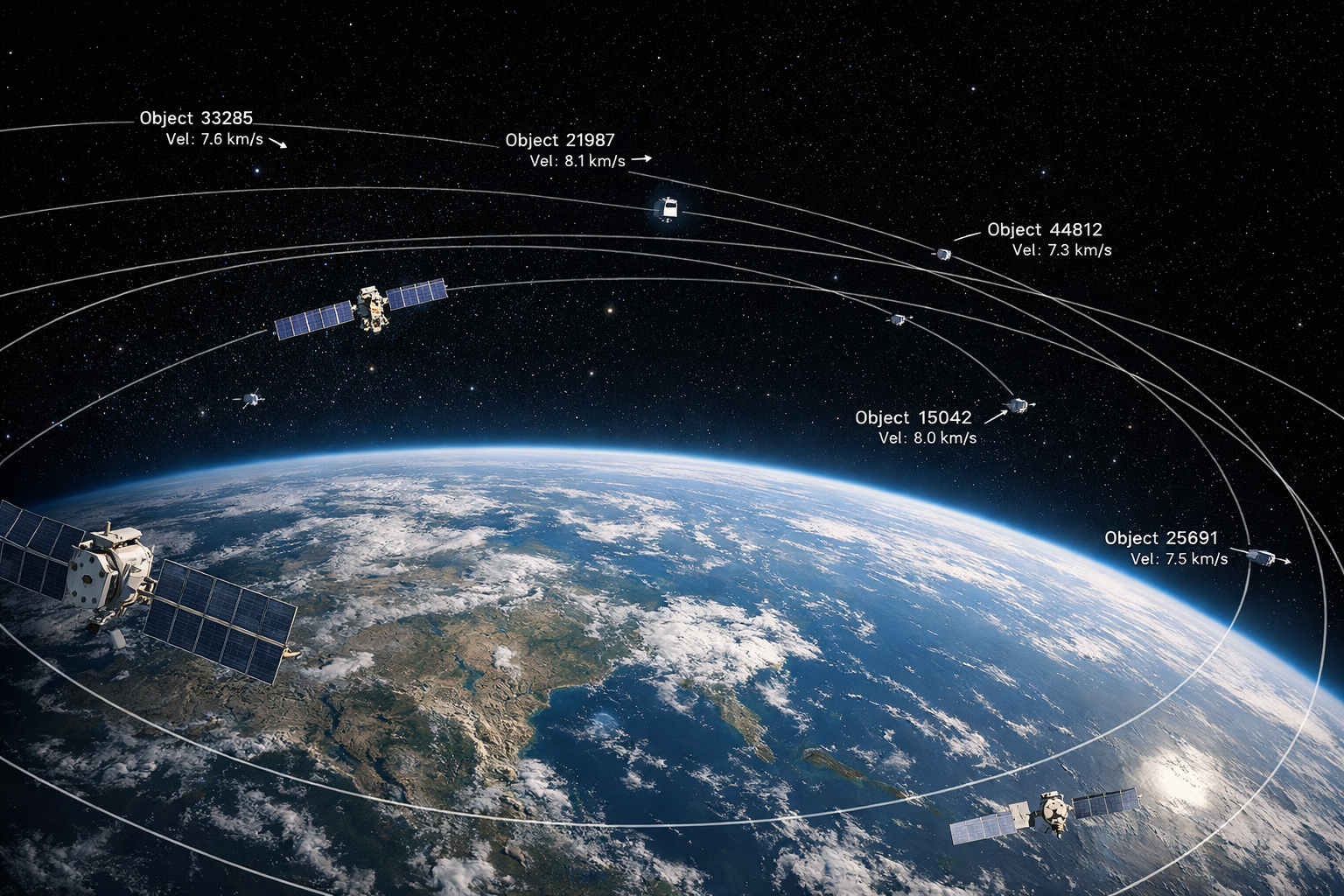
Our mission is to revolutionize the way we protect Earth’s orbital infrastructure. While traditional debris monitoring relies on ground-based systems limited by atmospheric interference and vast distances, we are developing a dynamic, “in-situ” monitoring solution. We aim to track space debris trajectories directly from the orbital environment using a cutting-edge CubeSat platform, capturing critical data in real-time exactly where the risk is highest.
The technological heart of our project lies in the integration of ground-based neural networks. This allows our CubeSat to not only detect small-scale fragments—often invisible to terrestrial radar—but also to predict their trajectories with extreme precision through real-time processing.
The impact of our missions is twofold:
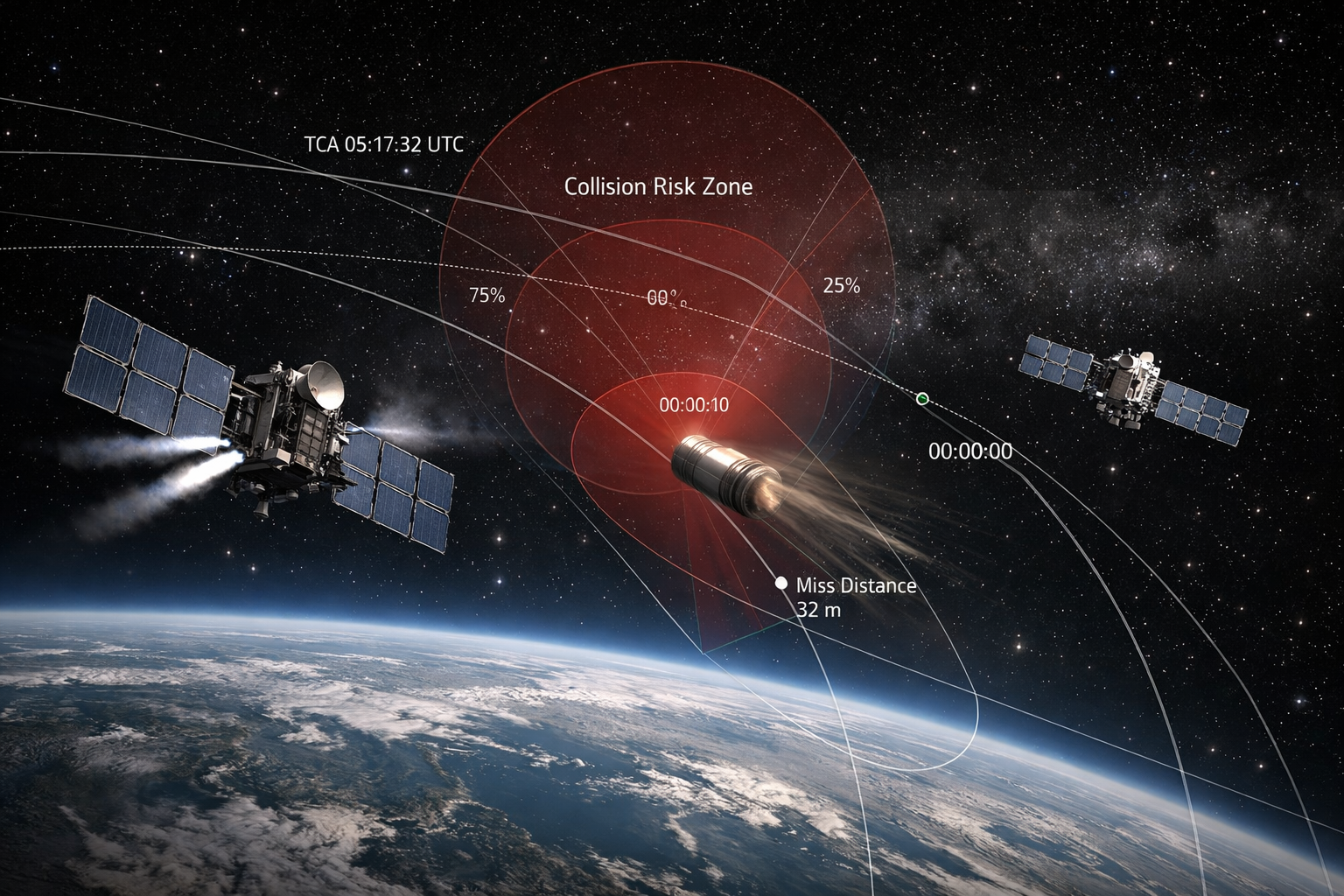
Immediate Security
By providing high-fidelity predictive data, we help prevent catastrophic collisions, safeguarding the operational satellites that drive human technology.
Long-term Sustainability
We are taking a decisive step toward mitigating the Kessler Syndrome. Precise tracking is the essential first step for future active removal missions, ensuring that space remains a safe and accessible resource for future generations.
Through our project, we are not just observing the problem; we are deploying artificial intelligence where it is needed most, serving as a technological sentinel for the future of space exploration.
Our Missions
Discover more on our missions.
Kessler
LEOPARDD